Dominica, affectionately known as the Nature Island of the Caribbean, offers a landscape unlike any of its neighbours. While other islands boast flat white-sand beaches, this country is a rugged fortress of volcanic peaks, emerald valleys, and dense rainforests. Because the island’s most spectacular sights are scattered across this difficult terrain, relying on public transport or tour buses can be limiting.
Driving in Dominica is the definitive way to unlock the island’s secrets, but it is an endeavour that requires preparation, a bit of bravery, and a firm grasp of local road culture. For many tourists, the prospect of navigating the island’s winding roads can be daunting. The island is famous for its hairpin turns, steep gradients, and narrow coastal passes that often seem to cling precariously to the cliffs. However, if you take the challenge, the rewards are immense.
Renting a car means you can arrive at the Emerald Pool before the cruise ship crowds or linger at a roadside snackette to watch the sunset over the Caribbean Sea. This guide provides everything you need to know to transition from a nervous visitor to a confident driver on Dominican roads.
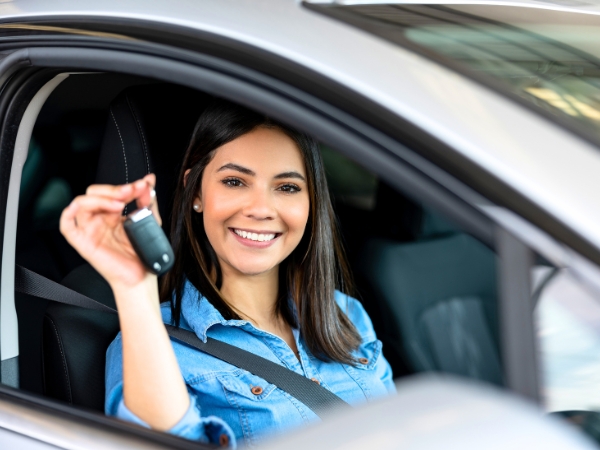
Before you can get behind the wheel and start your adventure, there are several local requirements that you have to secure in order to legally drive and rent a car. Make sure to prepare all documents needed, so you can have a smooth journey.
Dominica requires all foreign drivers to obtain a temporary visitor’s driving permit, regardless of whether you hold a valid license from your home country or an International Driving Permit (IDP). It is a legal requirement and must be presented if you are stopped by the Commonwealth of Dominica Police Force.
The good news is, this permit is relatively easy to obtain. Most major car rental agencies are authorised to issue it on the spot when you pick up your vehicle. The cost is currently $30 XCD for a one-month permit or $60 XCD for a three-month permit. If you are not renting through an agency, you can obtain one at the Traffic Department in Roseau or at the airports.
Aside from the temporary visitor’s permit, you must also carry your valid driving license, your passport, and your rental insurance papers at all times. Make sure that you have the physical documents and not just digital copies on your phone. Keeping these in the glove compartment ensures you are prepared for routine traffic stops or the unfortunate event of an accident.
While the legal driving age in Dominica is 18, most rental companies set their own minimum age at 25. Some may allow drivers as young as 21, but this often comes with a Young Driver Surcharge, which is added to your daily rate. Conversely, some agencies have an upper age limit of 70 years old, requiring senior drivers to submit a recent medical certificate stating that they are still capable of driving. It is also standard practice for agencies to require that you have held your license for at least two years.
Dominica enforces strict regulations on speed limits, safety, and parking to protect everyone on the road. It is vital to know and understand the official traffic laws to avoid fines and other penalties.
The most important rule to remember is to drive on the left side of the road. If you are used to driving on the right, this requires a huge adjustment at first. Most rental vehicles are right-hand drive, which helps keep your orientation correct, but extra vigilance is required to ensure you do not drift toward the right on quiet roads.
At roundabouts, which are very common in Roseau and near the airports, the rule is to yield to traffic already in the circle coming from your right. Approach slowly and look to your right before entering. Always signal your intentions clearly, as lanes in Dominica are often narrower than those in Europe or North America.
Speed limits in Dominica are noticeably lower than in many other countries. In urban areas, such as Roseau or Portsmouth, the limit is 32 km/h (20 mph). On open rural roads, the limit increases to 64 km/h (40 mph). This cautious pace is necessary due to the frequency of sharp bends and steep hills, making high speeds dangerous and often physically impossible. Police do monitor these limits, particularly near school zones and village centres, so make sure to look for signs and adhere to them.
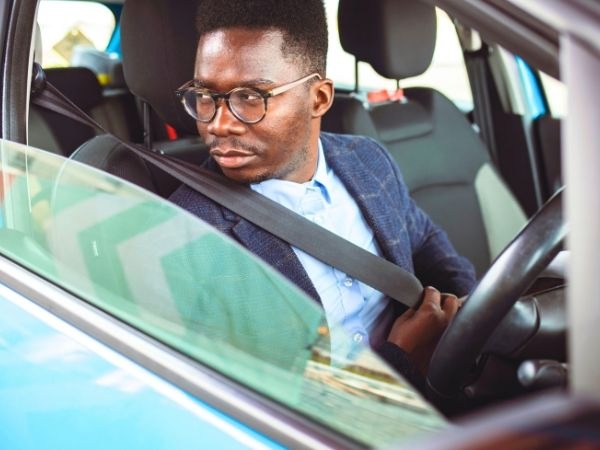
Safety regulations are also strictly enforced. Seatbelts must be worn by the driver and all passengers. Using a mobile phone while driving is strictly prohibited unless you are using a hands-free system. Furthermore, the legal blood alcohol concentration limit is 0.05% BAC. Given the cliff-side nature of the roads and the lack of guardrails in many sections, a zero-tolerance approach is best for visitors.
In the capital of Roseau, parking is heavily regulated. Look for colour-coded curbs and signs indicating "No Parking" zones. In many parts of the city, you must purchase a parking voucher from a nearby shop or vendor and display it on your dashboard. Outside of the major towns, parking is more informal, but you must ensure your vehicle is parked completely off the narrow roads to avoid obstructing the flow of buses and trucks.
In Dominica, the official traffic laws are only half the story. To drive successfully here, you must understand the unwritten rules of the road, from the language used by the locals to the driving etiquette.
Locals use the car horn as a vital communication tool. A short tap means "Thank you", "I am passing you now", or simply "I see you". However, a long, firm blast is an essential safety measure when approaching blind mountain curves. Because many roads narrow to a single lane around corners, sounding your horn alerts oncoming traffic to your presence before you see them. If you hear a horn from around a bend, slow down and be prepared to pull over.
Dominican drivers also use their lights to relay intentions and show courtesy. If an oncoming driver flashes their high beams at you at an intersection, they are usually inviting you to turn or pull out in front of them. Conversely, if a driver behind you flashes their lights, they likely wish to overtake. Hand signals are also a common road language; a hand waved out of a window usually indicates that it is safe for you to pass the vehicle ahead.
It is also vital to learn the local driving etiquette. Always yield to larger vehicles, such as trucks and colourful minibuses, on narrow stretches. If you are travelling downhill and meet a vehicle coming uphill on a narrow pass, the vehicle heading down should yield. It is much harder for a heavy vehicle to regain momentum or traction on a steep incline than it is for a vehicle to start moving again on a descent.
Additionally, be aware that local minibuses may stop suddenly to pick up passengers. Make sure to keep a generous following distance. It is also common for drivers to stop in the road to have a quick chat with a pedestrian; patience is the expected etiquette here, rather than aggressive honking.
Driving in Dominica presents a unique set of physical challenges that go beyond simple traffic navigation. Because of the island’s intense rainfall and volcanic activity, road hazards are a standard part of every journey. It is important to drive slowly and keep focused on the road.
The most prominent hazards are the deep concrete drainage ditches that line many narrow roads. These are often over a foot deep and unmarked, frequently hidden by overgrowth. Dropping a tyre into one of these can end your journey instantly. Be prepared to swerve to avoid these ditches and potholes. If you see an oncoming car drifting into your lane, they are likely just navigating a road defect.
Additionally, stay alert for pedestrians and wandering livestock like goats, cows, and chickens. They always have the right of way. At night, large land crabs occasionally scurry across the road, and running over a large one can actually puncture a tyre with its hard, sharp claws.

Driving in Dominica is an experience that requires respect, patience, and a sense of adventure. It is not merely a means of transportation, but rather an immersion into the rhythm of the island. By securing your requirements, following the traffic rules, and respecting the unwritten rules of the road, you can have a safe and memorable journey.
While the terrain is rugged and the curves are sharp, the independence gained by having your own vehicle is incomparable. You will have the freedom to stop at every scenic lookout and explore the wild Atlantic coast. The challenges of the road become all with it when you find yourself standing at a hidden waterfall or overlooking a lush valley shrouded in mist.
Do not let the winding roads intimidate you. With a sturdy 4x4 and a cautious approach, you can navigate the Nature Island like a local. Ready to experience the raw beauty of the Caribbean? Book your vehicle rental on Final Rentals today, secure your permit, and prepare for an adventure of a lifetime in Dominica.