Dominica, the Nature Island of the Caribbean, is a paradise with volcanic peaks, primordial rainforests, and cascading waterfalls best experienced by car. To truly discover its hidden wonders away from rigid tour groups, renting a vehicle is an absolute necessity. Driving on the island gives you the freedom to build your own itinerary and beat the crowds.
While global energy shifts have caused local fuel prices to rise, car rentals remain highly cost-effective. Taxis across the island’s challenging, mountainous terrain are notoriously expensive, and the public minibus system rarely services the remote trailheads and eco-lodges that make Dominica legendary. Understanding how to fuel up in Dominica is vital for a seamless and stress-free road trip across this rugged landscape.
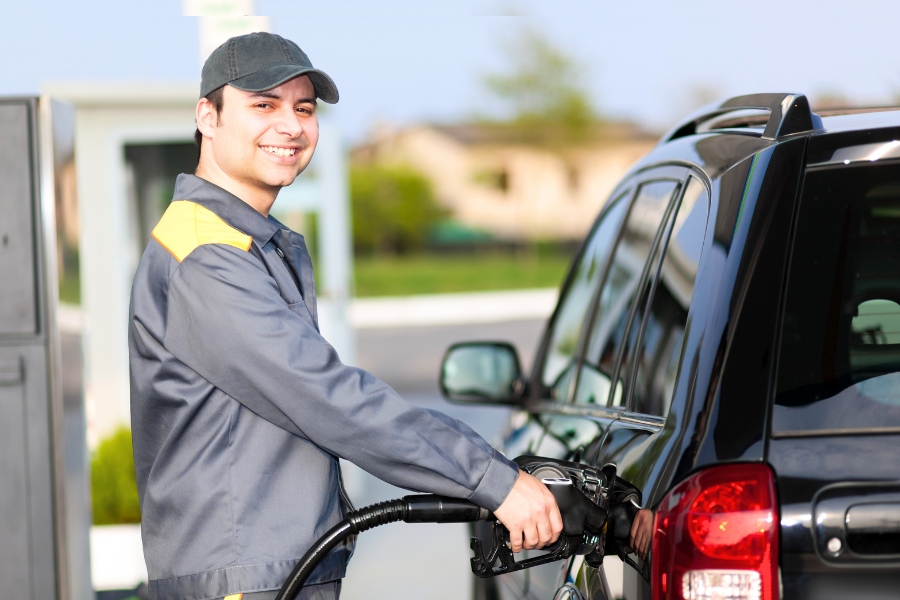
The most important thing to remember about refuelling is that self-service gas stations do not exist on the island. Every station you encounter is fully serviced. When you pull up to a pump, you must remain in your vehicle. A friendly station attendant, locally referred to as a pump operator, will approach your window to manage the entire process on your behalf. This traditional service layout eliminates the confusion of operating unfamiliar foreign pumping mechanisms, making it an incredibly relaxed experience for visitors.
Before you even approach a station, you must know your rental vehicle’s fuel type. You can usually find this information on the rental agreement, near the fuel cap, or on the dashboard. Most standard compact cars and small SUVs on the island utilise unleaded gasoline. Conversely, larger 4x4 trucks, commercial vans, and certain premium off-road models require diesel. Because of the extreme inclines and rigorous driving conditions across the island, misfuelling will result in engine damage that is never covered by standard insurance.
When the attendant arrives at your window, state your required fuel clearly and confidently, specifying unleaded or diesel. Communicating your desired amount is equally uncomplicated. You can instruct the operator to fill the tank by simply requesting a complete fill-up or specifying a precise amount in the local currency. It is wise to monitor the pump display from your seat as it runs, ensuring it begins at zero and stops accurately at your requested amount. This practice is standard etiquette and ensures complete transparency.
Gas stations are not evenly distributed across the island. Most stations can be found in the capital city of Roseau along the southwestern coast, and in the secondary town of Portsmouth situated in the northwest. Beyond these coastal bastions, the infrastructure thins out dramatically. If you intend to cross the interior through the dense rainforest, hike within the Morne Trois Pitons National Park, or traverse the rugged paths of the east coast, you must adhere strictly to the half-tank rule. Never allow your fuel gauge to drop below the midway point before seeking out a station.

Payments at Dominican gas stations require a blend of preparation and local awareness. The official currency on the island is the Eastern Caribbean Dollar (XCD). While many establishments catering directly to tourists might accept United States Dollar (USD) or other currencies, settling your fuel bill in local cash is by far the most efficient and preferred method. It guarantees that you avoid arbitrary exchange rates applied by an individual merchant and expedites the transaction significantly.
While the global travel landscape leans heavily toward digital transactions, cash is still king in Dominica. Gas stations located in Roseau and Portsmouth are generally equipped with modern electronic point-of-sale terminals that accept major international credit and debit cards. However, smaller or more rural stations scattered across peripheral routes may operate on a cash-only basis, or their card readers may experience connectivity outages. Therefore, you should always have Eastern Caribbean cash specifically earmarked for fuel expenses, preventing potential problems at rural pumps.
If you find yourself using a credit card at a major station, you should apply safety measures. Because the attendant processes the payment, you should ensure that your credit card remains within your line of vision throughout the transaction. Most modern stations utilise portable payment terminals, enabling the attendant to bring the device directly to your driver's side window, allowing you to insert your card, input your identification pin, or authorise the charge right before your eyes. Always request and keep the printed receipt to cross-reference later with your banking statements.
Understanding tipping etiquette is another essential facet of local commerce. In Dominica, tipping the attendant is not legally required, nor is it aggressively solicited, as the service is inherently built into the operational structure of the station. However, offering a small token of appreciation is considered a common courtesy, particularly if the attendant displays genuine warmth, offers helpful local driving advice, cleans your windshield, or checks your vehicle's tyre pressures. A modest tip ranging from two to five Eastern Caribbean Dollars is deeply appreciated by the local workforce and reinforces the harmonious relationship between visitors and the community.

Feel the Fresh Breeze: Using the vehicle's air conditioning system places a heavy, continuous load on the engine and accelerates fuel consumption. When driving through the cool, high-altitude interior rainforests, lower your windows to enjoy the fresh breeze and save money at the pump.
Organise Your Routes: Backtracking across the island's winding, circuitous ridges can easily double your daily driving distance. Group your excursions geographically by mapping out clusters, like visiting Trafalgar Falls and Titou Gorge on the same afternoon, before proceeding on your journey.
Monitor the Fuel Level: Modern gas stations are heavily concentrated in urban coastal hubs such as Roseau and Portsmouth, leaving the interior rainforests completely unserved. Never let your fuel gauge drop below the midway point, as hunting for a station in a remote village wastes both time and fuel.
Refuel Before Drop-Off: Local rental agencies enforce strict fuel policies and will charge a massive premium to top up the vehicle. Stop at a public service station near the airport or drop-off point immediately before your return time to avoid these costly administrative fees.
Opt for Cash Payments: Settling your fuel bill using Eastern Caribbean Dollars is by far the most efficient and cost-effective method. Paying in local cash prevents you from losing money on unfavourable exchange rates sometimes applied to foreign currencies at the pump.
Are fuel prices the same across the island? Yes, petrol and diesel prices are strictly uniform throughout Dominica. The national government tightly regulates the fuel sector with a standardised pricing mechanism, meaning a gallon of fuel costs the same amount in remote northern villages as it does in central Roseau.
Can I pay for my fuel bill in cash with USD? Yes, many gas stations throughout Dominica will accept United States Dollars as a form of payment due to their widespread usage across the Caribbean. However, it is generally discouraged because the exchange rate applied at individual stations is usually less favourable.
Do I really need to give the attendant a tip? Tipping the gas station attendant is not legally required or aggressively solicited in Dominica, as the service is inherently built into the operational structure. However, offering a small token of appreciation ranging from two to five Eastern Caribbean Dollars is considered a common courtesy.
What are the usual operating hours for gas stations? Major gas stations in towns like Roseau or Portsmouth generally offer extended hours, with several key locations operating 24 hours a day. Conversely, rural stations in smaller villages or along the coast operate on restricted schedules and frequently close by 6:00 PM or 7:00 PM.
What should I do if I accidentally put the wrong fuel? Because of the extreme mountain inclines and rigorous driving conditions, misfuelling will result in engine damage. You must not start the engine under any circumstances, and you should immediately contact your rental agency to arrange for a mechanic to drain the tank.
Learning how to fuel up your rental car in Dominica is a thoroughly manageable and user-friendly process. The island’s complete reliance on full-service stations removes the technical guesswork for drivers, while strict government price regulations ensure the prices remain stable amid the global crises. By mapping out gas stations, adopting smart driving techniques, and bringing cash for payments, you can easily control your fuel expenses while enjoying a road trip across the island.
Do not let the minor logistics of refuelling deter you from embarking on the ultimate Caribbean driving adventure. The true heart of Dominica lies hidden far beyond the reach of public transport and crowded tourist shuttles. Renting a vehicle grants you the priceless keys to the island, unlocking a world of spontaneous discoveries and authentic local interactions. Book your car on Final Rentals today and discover the untamed secrets of the Nature Island completely on your own terms.